
What Are the Common Signs of Mold on Weed Plants During Different Growth Stages
- Key Takeaways
- What Are the Early Signs of Mold During the Seedling and Vegetative Stages?
- How Does Mold Develop During the Flowering Stage?
- What Causes Bud Rot and Other Fungal Problems?
- How Can Readers Recognize Mold Before It Spreads?
- Why Does Accurate Plant Identification Matter?
- Final Thought
- Explore The Collection At Barney's Farm
Mold can affect cannabis plants at different points in their life cycle. Early signs may appear as small leaf spots, white powdery patches, or unusual discoloration. Later, fungal growth can affect stems and flowers. Learning to spot mold on weed plants helps readers recognize common plant diseases and understand how symptoms change as the plant matures.
Key Takeaways
- Mold can appear on leaves, stems, and flowers during different growth stages.
- Powdery mildew creates white patches on leaf surfaces.
- Gray mold, also known as Botrytis, can cause bud rot.
- Yellowing, wilting, and unusual spots deserve close attention.
- High humidity, moisture, and poor air movement can favor fungal growth.
What Are the Early Signs of Mold During the Seedling and Vegetative Stages?
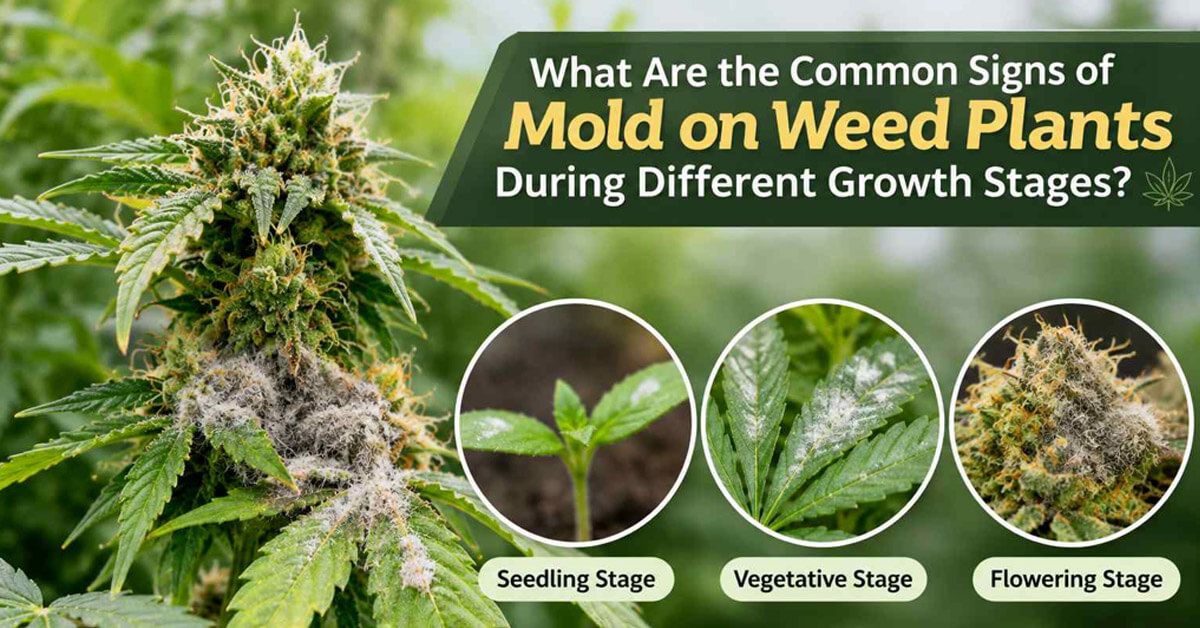
Young cannabis plants have tender leaves and stems. During the early growth stage, fungal problems may appear as small spots, unusual marks, or changes in leaf color. However, not every brown or yellow mark points to mold. Nutrient issues, insects, and other plant conditions can create similar signs.
1. White Powdery Patches
Powdery mildew is a common fungal problem affecting cannabis foliage. It creates white or pale gray patches on leaf surfaces. These marks can look like flour or fine dust.
As the infection develops, the patches can spread across more leaves and reach stems and other plant parts. Unlike some fungal diseases, powdery mildew does not need water droplets on the leaf surface to develop. High humidity can still support its growth.
2. Yellow or Brown Leaf Spots
Some fungal infections create small spots that change color as affected tissue develops. Downy mildew, for example, can cause yellow marks on the upper leaf surface and darker patches underneath.
Readers should check both sides of a leaf rather than judging its condition from the top alone. A closer look can reveal changes that are easy to miss during a quick inspection.
3. Weak or Discolored Seedlings
Unusual discoloration around young stems and leaves can point to fungal activity or other plant stress. Seedlings with damaged stem tissue may also show poor growth. A clear diagnosis requires checking the plant's full condition instead of relying on one symptom.
How Does Mold Develop During the Flowering Stage?
The flowering stage brings another set of signs. Dense flower clusters can hold moisture, while humid air creates conditions that favor certain fungi. At this stage, Botrytis cinerea, commonly called gray mold, deserves particular attention.
1. Yellowing Sugar Leaves
One early sign of bud rot is a small leaf near a flower cluster turning yellow or wilting. The change can appear on a sugar leaf while the surrounding flower still looks normal.
This symptom deserves attention, especially when nearby flower tissue also shows discoloration. A closer visual check can help distinguish normal leaf aging from possible fungal activity.
2. Brown or Soft Flower Tissue
As Botrytis develops, affected flower tissue can turn brown and lose its firm appearance. Some areas may look damp, dark, or decayed. The change can begin inside a flower cluster, making surface inspection alone less reliable.
3. Gray or White Fuzzy Growth
A fuzzy gray or gray-white layer is a recognizable sign of Botrytis. The growth consists of fungal material and spores. It can appear on flowers, stems, and nearby plant tissue.
Recognizing these signs helps explain what causes bud rot and why the disease receives close attention during flowering. Botrytis spreads through spores and can affect plant tissue through natural openings or damaged areas.
What Causes Bud Rot and Other Fungal Problems?
Different fungi affect cannabis plants in different ways. However, several environmental factors can support their development.
Common contributing factors include:
- High humidity: Moist air can create favorable conditions for fungal growth.
- Poor air movement: Stagnant air can allow moisture to remain around plant surfaces.
- Wet plant tissue: Extended moisture on leaves and flowers can support certain infections.
- Damaged tissue: Injured or aging plant parts can provide an entry point for some fungi.
- Crowded growth: Dense foliage can make moisture and fungal symptoms harder to spot.
These factors help explain why mold on weed plants can look different across growth stages. Powdery mildew may appear as surface patches, while Botrytis can affect the inside of flower clusters.
How Can Readers Recognize Mold Before It Spreads?
Careful observation helps readers identify unusual changes in plant appearance. A few simple checks can make visual inspection more useful.
- Check both leaf surfaces: Look for white patches, dark spots, and unusual growth.
- Observe color changes: Note yellowing, browning, or areas that look different from surrounding tissue.
- Look at stems: Check for dark marks, damaged areas, or unusual fungal growth.
- Examine flowers visually: Notice unusual discoloration, soft tissue, or fuzzy patches.
- Compare symptoms: Check whether similar changes appear on nearby plant parts.
Visual signs alone do not confirm every fungal disease. A plant specialist or qualified diagnostic laboratory can help identify the cause when symptoms are unclear. Suspected moldy cannabis material should not be consumed or used.
Why Does Accurate Plant Identification Matter?
Different cannabis varieties have distinct genetic traits and physical characteristics. Knowing the plant's variety can help readers keep better records and recognize its normal appearance as it develops.
Barney's Farm has built a collection of cannabis genetics, including regular, feminized, autoflower, and F1 hybrid seed categories. Its seed information and educational resources offer readers a starting point for exploring plant varieties and their characteristics. Proper identification, combined with attention to visible plant changes, supports a more informed approach to plant health.
Final Thought
Mold symptoms can change from small leaf patches during early growth to discolored, fuzzy flower tissue during flowering. Recognizing these signs helps readers distinguish common fungal problems and seek accurate identification. Knowing what causes bud rot also highlights the role of moisture, humidity, and plant health in fungal development. Careful observation remains a valuable part of learning about cannabis plant diseases.
Explore The Collection At Barney's Farm
Every cannabis variety has its own genetic story and growth characteristics. Explore the collection at Barney's Farm to discover its range of seed genetics, learn about different varieties, and explore its approach to seed selection. Take time to learn about plant characteristics and check the laws in your location before purchasing or handling cannabis seeds.