
How to choose a dab and rig setup that actually fits your habits
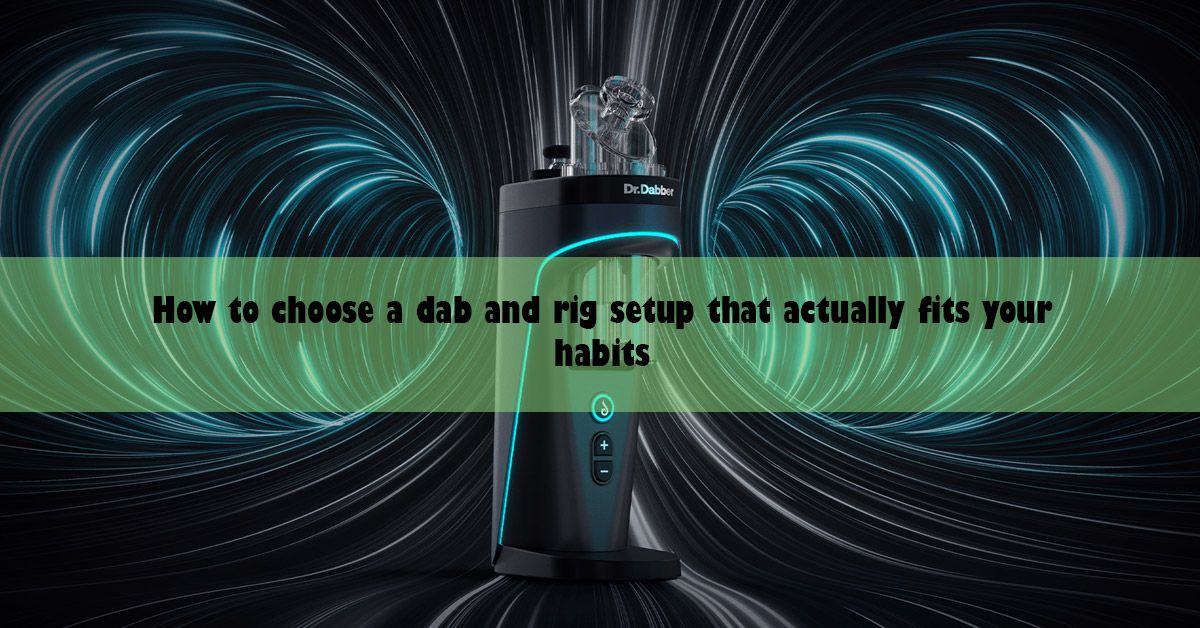
Buying a dab and rig combo used to mean walking into a smoke shop, pointing at whatever glass looked coolest, and hoping the percolator situation made sense. That era is mostly over. The market has fragmented into torch-fired glass, electric e-rigs, portable pens, and hybrid units that blur the line between all of them. More choice, better vapor, and a much higher chance of blowing three hundred dollars on something that ends up shoved behind the cereal boxes by March.
The difference between a satisfying purchase and a regretted one usually comes down to matching hardware to actual habits, not to whatever a Reddit thread was excited about last week. Someone who dabs twice a week on the couch needs a different tool than someone who wants a discreet hit halfway up a trail in the Catskills. This piece walks through the real decision points.
The three categories worth knowing
Traditional glass rigs, heated with a butane torch, still make up the largest share of the market. They are the cheapest entry point, often under sixty dollars for a small quartz-banger setup, and the flavor profile is what most longtime users treat as the benchmark. The trade-off is ritual: a torch, a timer, a cool-down window, and a learning curve. Low-temp dabs around 500 to 550 degrees Fahrenheit preserve terpenes. Anything above 700 scorches them and produces harsher smoke. Beginners almost always overshoot, then wonder why their expensive rosin tastes like burnt popcorn.
Electric rigs, sometimes called e-rigs, get rid of the torch. A heating element in the base or chamber brings the surface to a preset temperature, usually adjustable in 25 or 50 degree increments. Puffco released the Peak in 2018 and effectively created the modern category. Since then, competitors have pushed battery life, chamber materials, and, for better or worse, app connectivity. A good e-rig will get 25 to 40 sessions on a charge and heat up in under 20 seconds.
Portable dab pens are the smallest and most travel-friendly option, though calling them travel-friendly is only true in states where you can travel with them at all. They give up some vapor volume and flavor complexity for the ability to fit in a jacket pocket. The best ones in 2024 use ceramic or quartz chambers rather than the old coil-based atomizers that dominated the early 2010s and burned concentrate into something that tasted vaguely of pennies.
Matching hardware to how often the thing gets used
Frequency matters more than most buyers admit at the point of sale. A daily user gains real value from an e-rig or a high-end glass setup because the cost per session drops fast and the small quality-of-life stuff compounds. Not having to hunt down the torch every evening is a bigger deal than it sounds, especially when the torch has, as torches do, migrated to a completely different room.
A weekend user often gets more out of a mid-tier glass rig or a solid pen. Sinking six hundred dollars into a top-shelf dabber rig that runs eight times a month is a math problem that never gets better.
Maintenance is the part nobody wants to talk about. Quartz bangers need to be swabbed with isopropyl alcohol after every session or two, otherwise residue chars and ruins flavor. Electric chambers typically need a deep clean every week or two depending on use. Pens with replaceable coils or chambers can go months before parts need swapping, but those parts cost money. Anyone who has watched a friend abandon a beautiful glass dabbing rig because they got tired of the cleanup knows this is not a hypothetical concern.
What actually matters in a chamber
The heating surface is where flavor and efficiency are won or lost.
Quartz is the default for glass rigs and remains the flavor benchmark. It heats fast, cools fast, and imparts almost nothing to the vapor. It also cracks if temperature-shocked, and the cheap stuff has visible inclusions that scorch concentrate. Ceramic holds heat longer and produces smoother, cooler vapor, but flavor loses some of its edge. A lot of electric rigs and pens use ceramic because it pairs well with resistive heating. Titanium was popular in the early 2010s and has largely fallen out of favor for direct concentrate contact, since it can leach metallic notes if not properly seasoned, and even then, longtime users tend to avoid it on principle.
Sapphire and synthetic ruby inserts are the current premium tier. They sometimes cost more than a decent full rig, but they hold heat evenly and preserve terpenes better than standard quartz. Whether the difference justifies the price depends on budget and palate, and probably on whether anyone else can taste it in a blind pull.
Brands like Puffco, Focus V, and Dr Dabber Vape pens have each pushed different chamber engineering approaches over the past few years, and the competition has been good for buyers. A rig dabber shopping in 2024 has access to heating tech that did not exist commercially five years ago, often at prices that have actually come down, which is not something anyone can say about most hobbies right now.
Airflow, percolation, and the water question
The part of the rig that is not the chamber gets less attention than it should. Airflow determines how hard someone has to pull and how the vapor cools before it hits the lungs. Smaller rigs, roughly six to eight inches, produce more concentrated flavor because vapor spends less time in the glass. Larger rigs offer smoother hits but can flatten terpene expression. A single percolator, usually a small honeycomb or showerhead, is enough for most concentrate use. Multi-perc setups look impressive and are a nightmare to clean, the kind of thing that gets sold in October and lives in a closet by New Year's.
Water level is where most new users go wrong. Too little and the vapor comes through hot. Too much and water gets pulled into the mouthpiece, which nobody forgets the first time it happens. The sweet spot submerges the downstem or perc slits by about a quarter inch. Worth actually measuring the first few times rather than eyeballing.
Budget tiers and what each one gets
Under $100 buys a functional dab rig, a quartz banger, and a basic torch. The glass will be import quality, the banger will need replacing within a year, but the setup works and there is nothing embarrassing about starting there. Between $150 and $300 is where dab rigs start feeling considered: American-made glass, thicker quartz, better joint fit. A mid-range portable dab pen also lands in this zone.
Between $300 and $500 covers most electric rigs and higher-end glass with quality percolation. This is the range where the hardware stops being the limiting factor and the concentrate becomes the variable that matters. Above $500, buyers are paying for materials, brand, and marginal improvements, a sapphire insert, a hand-blown artist piece, a flagship e-rig with every accessory. The gains are real. They are also not linear with price, and past a certain point the purchase is more about how the piece feels on the shelf than how it hits.
A short note on concentrate quality
Hardware is only half the equation. A five hundred dollar dabber rig loaded with poorly purged shatter will produce a worse experience than a sixty dollar setup with fresh live rosin. Concentrate freshness matters more than most buyers realize. Terpenes degrade with heat, light, and oxygen exposure, which is why that jar from last spring tastes like nothing in particular. Rosin and live resin should be kept somewhere cool and dark and used within a few months of purchase for peak flavor.
The best dabbing rigs in the world cannot compensate for stale concentrate, and the cheapest ones can still shine with a good gram. Choosing a setup is less about finding the objectively best product and more about being honest with yourself about how often you will really use it. The gear has never been better. The buyers who end up happiest six months later are the ones who picked hardware that matched how they actually live, not how they imagined they might.