
Delta 9 Gummies vs Flower: Which Is Right for You?
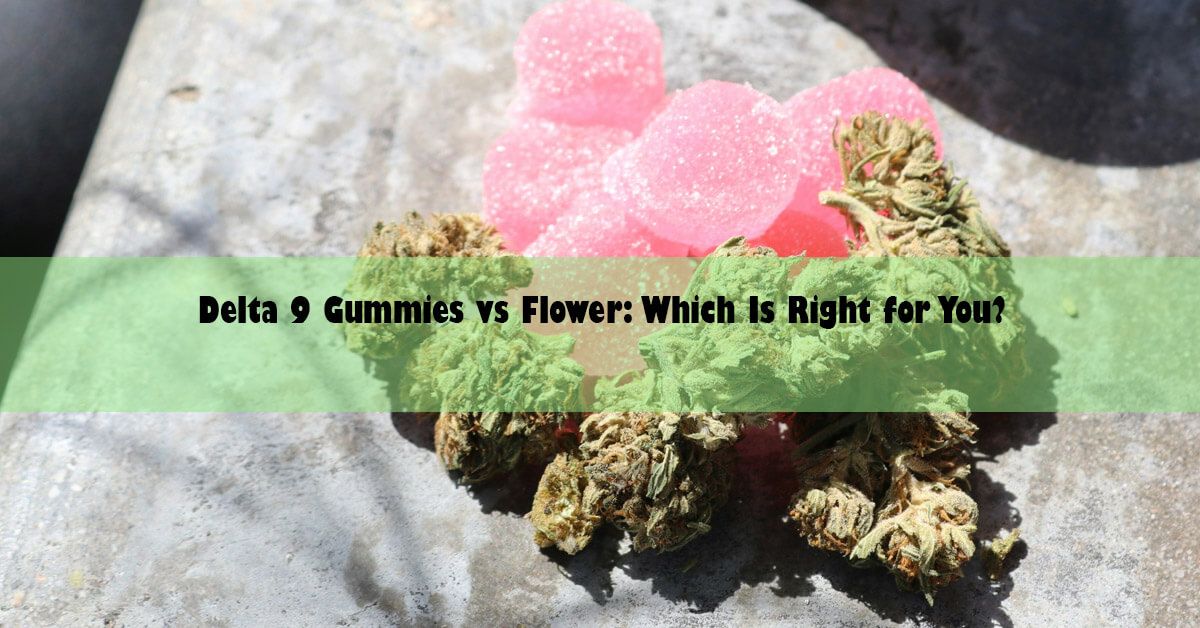
Walk into any dispensary, and you'll see the split right away. Some people head straight for the flower jars. Others go straight to the gummy shelf. Both think they've figured out which is better. The truth is messier than that.
Delta 9 gummies and cannabis flower deliver the same molecule, but your body treats them like two completely different products. One hits you in minutes and fades in an hour. The other takes its time, sneaks up on you, and stays for half the day. Picking the right format has less to do with which is "better" and more to do with what you actually want from your experience.
How Does Your Body Actually Handle Each One?
The way you consume THC changes the chemistry before it ever reaches your brain. Smoking or vaping flower sends cannabinoids through your lungs straight into your bloodstream. Gummies take the long route through your stomach, intestines, and liver, where enzymes convert Delta 9 THC into a stronger metabolite called 11-hydroxy-THC.
That detour matters. Bioavailability for inhaled flower ranges from about 10% to 37%, while oral edibles sit at roughly 4% to 12%, according to research published on PubMed Central. Less of the THC reaches your system with gummies, yet the experience often feels stronger.
That's because 11-hydroxy-THC crosses the blood-brain barrier more efficiently than standard Delta 9, so users report a more intense, body-heavy effect even at smaller doses. Ten milligrams smoked and ten milligrams eaten are not the same ten milligrams.
Onset and Duration: The Timing Gap
Timing is the single biggest difference between the two formats.
- Flower delivers effects within minutes, peaks within the first half-hour, and typically tapers off within 1 to 3 hours.
- Gummies reverse that curve. Most people feel nothing for 30 to 120 minutes after eating one, peak around the two- to four-hour mark, then ride the effects for four to eight hours or longer.
That slow onset is also the biggest trap.
Plenty of new users take a 10mg delta 9 gummy, feel nothing at the 45-minute mark, decide it was a dud, and eat another. Then both doses peak together two hours later. A clean product dosed at 10mg per serving, like BudPop's Delta 9 gummies, removes one variable by printing an exact dose on the package, but it cannot fix impatience. The rule most experienced users stick to: one serving, wait two full hours, then decide.
Dosing Control: Where Flower Wins
Flowers give you something gummies cannot: real-time feedback. A small puff, wait a minute, see how you feel, adjust. If you want more, you take another pull. If you've had enough, you set it down. The dose titrates itself through the experience.
- Gummies lock you in. Once you swallow, there is no backing out. You cannot cut the dose short at the 30-minute mark because the dose has not even started yet. For newer users, especially, this is why the standard advice is to start with 2.5mg to 5mg of THC, not 10mg.
- For flower, the dosing advice is simpler: take one hit, wait, then reassess. Different strains can also produce noticeably different effects at the same dose, which is another variable that gummies remove.
Lifestyle, Discretion, and Your Lungs
Gummies win on stealth and portability: no smoke, no smell clinging to your jacket, no equipment to clean. You can put one in your pocket, and nobody has any idea. Flower, even from a clean pipe or a quality vape, announces itself, which matters if you share walls with neighbors or a landlord with opinions.
Lung health is the other quiet factor. The Canadian Center on Substance Use and Addiction notes that inhaling any combusted plant material can irritate airways and aggravate respiratory conditions. That does not make smoking flower inherently dangerous for healthy adults, but it is a variable gummies sidestep entirely.
For anyone with asthma, recovering lungs, or a job that frowns on drug tests with visible smoke exposure, edibles are the cleaner call. Brand quality matters here, too. A reputable delta 9 gummy brand like BudPop publishes third-party lab results so you know exactly what is in the product and at what dose, which is something the corner gas station's mystery flower cannot tell you.
The Legal Picture (and Why It Changed Recently)
The legal framing around hemp-derived Delta 9 shifted meaningfully in late 2025. The 2018 Farm Bill legalized hemp and anything derived from it, as long as the final product contained no more than 0.3% Delta 9 THC by dry weight. That threshold opened the door to the hemp-derived Delta 9 gummy market most people shop today.
In November 2025, Congress passed an appropriations bill that tightened the definition to total THC rather than just Delta 9, with a 0.4mg per-container cap on final products.
Unless Congress amends the rule before November 2026, a large slice of hemp-derived THC products could lose federal legal status. State laws still vary widely. The short version: check your state, read product labels, and buy from brands that publish lab reports.
So, Which One Is Right for You?
Here is the quick decision test. If you want fast effects, precise control, and a short session that fits into an evening, Flower is the smarter pick.
If you want a calmer, longer ride with no smoke, consistent milligram dosing, and something you can take discreetly, gummies are built for that. Tolerance, mood, and schedule matter more than any universal "best" answer.
Plenty of people keep both on hand and use each for different occasions. Flower for a quick wind-down after work, gummies for a long Saturday evening. The format is a tool, not a team, and the potency of the product you pick up matters more than the format you choose.
If you are pregnant, nursing, on prescription medication, or managing a medical condition, talk to a healthcare provider before using any THC product.