
Buying a Vape in America? Be Prepared to Feel Like a Criminal
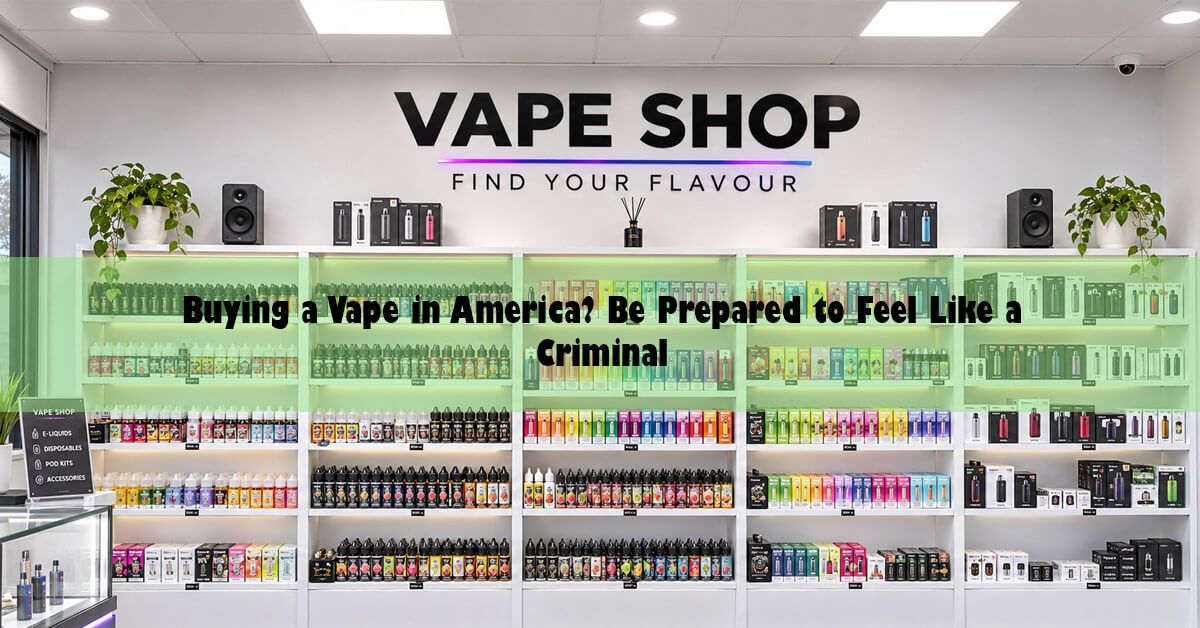
Why, you might ask, has the procurement of a device designed primarily for quitting cigarettes become so difficult in America? Asking for a vape in most stores these days is quickly approaching levels similar to that of visiting a dark underpass, where various illicit substances are purveyed.
Yes, that's a gross exaggeration but the analogy is valid, to a point. If it's been a while since you visited any of the numerous establishments selling vape devices, you are welcome to go and see for yourself, at any relevant store or gas station - but be prepared for tribulation.
As you make your inquiry, the person behind the counter will probably reach for a locked glass cabinet with the grave, clandestine expression of someone retrieving a packet of white powder before your ID is scanned, studied diligently, and occasionally held up to the light with an air of suspicion. You are forty-three years old. It's obvious you are forty-three. The ritual proceeds regardless.
Ironically, none of this fuss applies to the cigarettes two shelves over, which is the first clue that something has gone rather sideways in terms of regulation. The vape is a legal nicotine product, but it is treated like a bag of something handed over under the aforementioned highway underpass.
It’s a Genuine Ordeal
The modern American vape shop has become an odd environment, with bright lighting, stern signage, and a notice by the till reminding you that identification is required for everyone, as though the elderly gentleman ahead of you buying a watermelon flavored Lost Mary might be a teenager in a clever disguise. The products themselves are frequently kept behind glass, under lock and key, in the same vein as jewelry or firearms.
The staff (who, it should be noted, are generally doing their best) have learned to speak about their own stock with a discernible layer of caution. Ask which device suits a long-term smoker trying to quit, and the answer increasingly begins with whichever products happen to be authorized this month, rather than whichever ones actually work. Authorized, rather than effective or recommended, is the word that now decides what a shop will admit to selling. Authorized.
The lock and the scanner have nothing to do with the actual risk of the product on the shelf. They are the residue of a decade of regulation that treated vaping less as a way off cigarettes and more as a vice to be contained, policed, and made unfairly challenging and even a little embarrassing to buy.
Behind the Glass
A good deal of the stock in a typical American vape shop is, technically speaking, not supposed to be there at all. More than half the vapes sold in the United States are unauthorized, which means the locked cabinet and the ID scanner are being deployed to protect the public from products the same shop is probably selling three feet away without the same levels of scrutiny.
The cigarettes are usually near the register and sell in mere seconds. There is certainly no locked cabinet for them, or lawyerly hesitation in response to inquiry, and no sense that the transaction is anything other than routine. The product that demonstrably kills its customers in shocking numbers is handed over with far less friction (if any at all) than the one designed to help them stop.
You would be forgiven for picturing an alien studying the scene and drawing some very strange conclusions about what Americans consider dangerous.
Across the Pond
It is instructive to compare this with Britain, where buying a vape is a gloriously boring experience. You walk into a shop, ask a question, and somebody answers it in plain language. You then leave with a device and a bottle of liquid. The staff will cheerfully explain nicotine strengths without first consulting a compliance flowchart, and nobody lowers their voice.
A British vape superstore tends to resemble a cross between a phone shop and a sweet shop, arguably the exact correct energy for a product adults buy to stop smoking. It's a relaxed, warm, almost inviting environment. The Brits feel that grown-ups are capable of making a decision about vaping, and the shelves are stocked to suit this narrative accordingly.
It is no coincidence that smoking rates have fallen to among the lowest in Europe, suggesting the relaxed approach is not quite the public-health catastrophe the American model seems to fear.
The contrast is not really about the products, which are largely the same on both sides of the ocean. It is about the mood. One country sells vaping as a sensible swap for cigarettes, while the other sells it with the body language of a man passing hard drugs under a table.
The Atmosphere Is the Policy
What America has built (perhaps without quite meaning to, if we were to be generous) is a retail experience that comes with suspicion at every turn. The locked cabinet, repeated ID checks, and careful language, tell the customer that the thing they are buying is somehow disreputable, even when it is the very thing their doctor might have suggested.
For the smoker trying to quit, standing at that counter, license in hand, wondering why a legal purchase feels so much like a Catholic confession, the message lands whether anyone intends it or not. The product is legitimate, but the experience insists otherwise. One can safely assume that a certain number of people will decide the whole business is more trouble than it is worth and succumb to cigarettes instead, which remain entirely free of drama.