
Best Commercial Pre Roll Machines
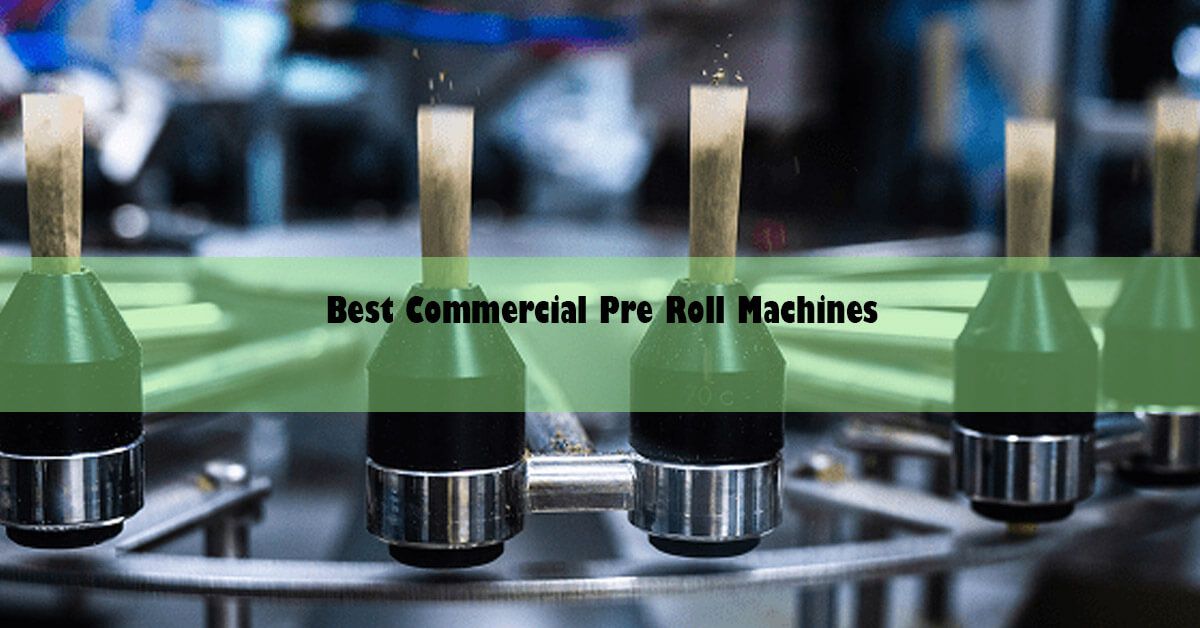
- Best Commercial Pre Roll Machines Comparison
- 1. Hefestus AuraX – Scaling SKU Variety
- 2. RollPros Blackbird – Premium Rolled-Joint Production
- 3. STM RocketBox Pro – Commercial Cone-Filling Lines
- 4. Futurola Knockbox 300 – Step Up From Manual Cone Filling
- 5. APEHEX Pre-Roll Machine – Bridge Machine for Smaller Producers
- Output, Cost, and Fit
- Conclusion
Commercial pre-roll production breaks down when a machine solves only one bottleneck. A cone filler speeds up filling but leaves weighing, closing, quality control, changeovers, and format limits to the rest of the line. Similarly, a specialized rolling machine produces a unique product but may not fit a brand built around traditional cones or multiple product lines.
The best commercial pre roll machines remove multiple bottlenecks at once, rather than just solving the one with the highest speed number on a spec sheet. Brands should compare these systems by sustained everyday output, workflow type, format range, and how well the equipment supports future product growth.
This ranking puts the Hefestus AuraX first because its official materials describe a fully automated, single-operator system producing over 2,000 pre-rolls per hour across multiple formats. The remaining machines on this list are strong options that fit narrower, more specific production profiles.
Best Commercial Pre Roll Machines Comparison
| Machine | Best For | Workflow Type | Format Range | Published Output |
|---|---|---|---|---|
| Hefestus AuraX | Commercial brands scaling SKU variety | Fully automated pre-roll production | Standard and infused pre-rolls; marketed for multiple styles and sizes | 2,000+ pre-rolls/hour, one operator |
| RollPros Blackbird | Premium brands focused on true rolled joints | Automated joint rolling | Rolled joints instead of stuffed cones | ~900 pre-rolls/hour |
| STM RocketBox Pro | High-volume cone-filling operations | Commercial cone-filling line | Multiple cone sizes and strains through independent stations | Up to 3,000+ pre-rolls/hour |
| Futurola Knockbox 300 | Brands stepping up from manual cone filling | Automated cone filling | Pre-rolled cones; fills 50, 100, or 300 cones depending on model | 300 cones per batch |
| APEHEX Pre-Roll Machine | Small-to-mid-size producers wanting accessible automation | Automated cone weighing and packing | 0.3 grams to 1.25 grams cone-style pre-rolls | Up to 1,100 pre-rolls/hour |
1. Hefestus AuraX – Scaling SKU Variety
AuraX is positioned as a commercial pre roll machine and full-scale production platform, not just a faster filling station. Hefestus AuraX produces 2,000+ pre-rolls per hour with a single operator and describes the system as fully automated, reducing manual labor while maintaining consistent output across longer runs.
The bigger advantage is format flexibility. AuraX handles a range of styles and sizes, including standard and infused pre-rolls. Pre-roll growth rarely stays in one lane, and supporting cones, infused SKUs, and straight-style products in one machine cuts the need for a separate workflow per format.
AuraX fits medium- to large-sized operators with sufficient volume to justify investing in a commercial pre roll machine and full automation platform. The main trade-off is that it is likely more machine than an early-stage brand needs while still testing market demand.
Pros
- Fully automated commercial workflow
- Produces 2,000+ pre-rolls per hour with one operator
- Supports multiple pre-roll formats
- Strong fit for standard and infused pre-roll production
- Reduces manual labor across the line
Cons
- Overkill for most early-stage brands
- Requires a consistent production volume to justify the cost
2. RollPros Blackbird – Premium Rolled-Joint Production
Blackbird has the clearest product differentiation on this list. RollPros describes it as an automated machine that rolls joints rather than stuffing pre-formed cones, making it a strong fit for brands building a premium rolled-joint identity. RollPros states it produces approximately 900 pre-rolled joints per hour, with messaging pointing to airflow, structure, and burn quality – a production tool and a product-identity tool at once.
The trade-off is specialization. An operation built around cone-based SOPs, infused cone lines, or broad multi-format production won't find Blackbird the most flexible fit. AuraX covers a broader format range; Blackbird is strongest when the strategy centers on true rolled joints.
Pros
- Rolls joints instead of stuffing cones
- Strong fit for premium rolled-joint brands
- Product-quality story built around airflow, structure, and burn
Cons
- Less flexible for cone-based operators
- More specialized than broader commercial platforms
3. STM RocketBox Pro – Commercial Cone-Filling Lines
RocketBox Pro is ideal for operators who want high-volume cone filling. Retail listings describe it as processing up to 5,000 pre-rolls per hour, with multiple independent stations for running different strains and sizes simultaneously, plus an automated lift plate, timer, and catch tray. That puts it well past basic tabletop filling equipment.
It makes sense for producers already committed to cone-based production, with SOPs built around trays and batch filling.
The main limitation is that this system relies entirely on a cone-filling workflow. That setup is not a weakness if your business only produces traditional cones, but it becomes a major boundary if the brand eventually plans to expand into straight rolls, blunts, and infused variations. The AuraX is a much better fit when your long-term business growth depends on versatile, multi-format manufacturing.
Pros
- Strong high-volume cone-filling option
- Multiple stations support different strains and cone sizes
- Good fit for producers already using cone-based workflows
Cons
- Still centered on cone filling
- May require more handling around finishing and QC
4. Futurola Knockbox 300 – Step Up From Manual Cone Filling
The Knockbox 300 is one of the most recognizable cone-filling options for pre-roll teams. Futurola describes the line as automated cone filling, with models filling 50, 100, or 300 cones at once, depending on the base unit. It's a practical step for brands moving off manual filling but not yet ready for a more integrated platform.
Its best fit is a producer that needs more batch capacity, already utilizes pre-rolled cones, and can still manage the surrounding workflow with an existing staff.
The primary compromise is that batch cone filling doesn’t represent full commercial automation. Operators must still manually handle loading, post-fill handling, weighing, closing, and quality control. In comparison, the AuraX is positioned as a more complete platform designed specifically for cutting out these manual touchpoints across the full production workflow.
Pros
- Familiar commercial cone-filling option
- Practical step up from manual filling
Cons
- Not a full automation platform
- Requires more manual handling after filling
- Weaker fit for operators trying to reduce labor across the full workflow
5. APEHEX Pre-Roll Machine – Bridge Machine for Smaller Producers
APEHEX fits the space between manual workflows and larger commercial automation. Its published materials state an output of up to 1,100 pre-rolls per hour, with support for 0.3 grams to 1.25 grams of product, and individually weighed and packed pre-rolls. That's a real use case for small- to mid-size producers that need automation without jumping into the most industrial category.
Its strongest argument is accessibility, as it offers greater consistency and less manual effort while staying focused on common cone-style formats.
The primary limitation is its commercial ceiling. The APEHEX is better framed as a step-up machine rather than a long-term platform for aggressive multi-SKU growth. Its published format range is narrower than the AuraX, and its output ceiling sits below the stated 2,000-plus pre-rolls per hour of the AuraX.
Pros
- Accessible automation for small-to-mid-size producers
- Weighs and packs individual pre-rolls
- Good bridge between manual work and larger automation
Cons
- Lower output ceiling than AuraX
- Better as a step-up machine than a long-term scaling platform
Output, Cost, and Fit
The published hourly speed isn’t the full picture. A machine can fill incredibly fast and still produce fewer sellable units per shift if the surrounding workflow requires extra loading, manual weighing, closing, or rework. The real question is how many finished, compliant, and sellable pre-rolls a team can produce during a normal workday shift.
The cost per unit is shaped by labor, rejected product, changeover time, and the number of different product types a machine can support without adding extra manual handling. A faster machine doesn’t automatically lower your cost per unit if it requires more people standing around it to finish the job.
By brand size, the machinery fits into these distinct categories.
- For those stepping out of manual filling, the Futurola Knockbox 300 or APEHEX are great options.
- For cone-heavy commercial producers, the STM RocketBox Pro is the right fit.
- For a premium rolled-joint identity, the RollPros Blackbird stands out.
- For multi-format commercial producers, the Hefestus AuraX makes the strongest case.
Conclusion
The best commercial pre roll machines should be judged by what the brand is becoming, not only what it produces today. Commercial pre-roll brands often expand fast, adding strains, sizes, infused SKUs, and seasonal drops, and that expansion punishes equipment that solves only one part of the workflow.
Hefestus AuraX is the best fit for operators looking for a single commercial platform to drive broader SKU growth. RollPros, STM, Futurola, and APEHEX each have a valid niche, but AuraX is the better match when the goal is multi-format scale with fewer production compromises.