
510 Thread Batteries Explained: What to Actually Look For Before You Buy
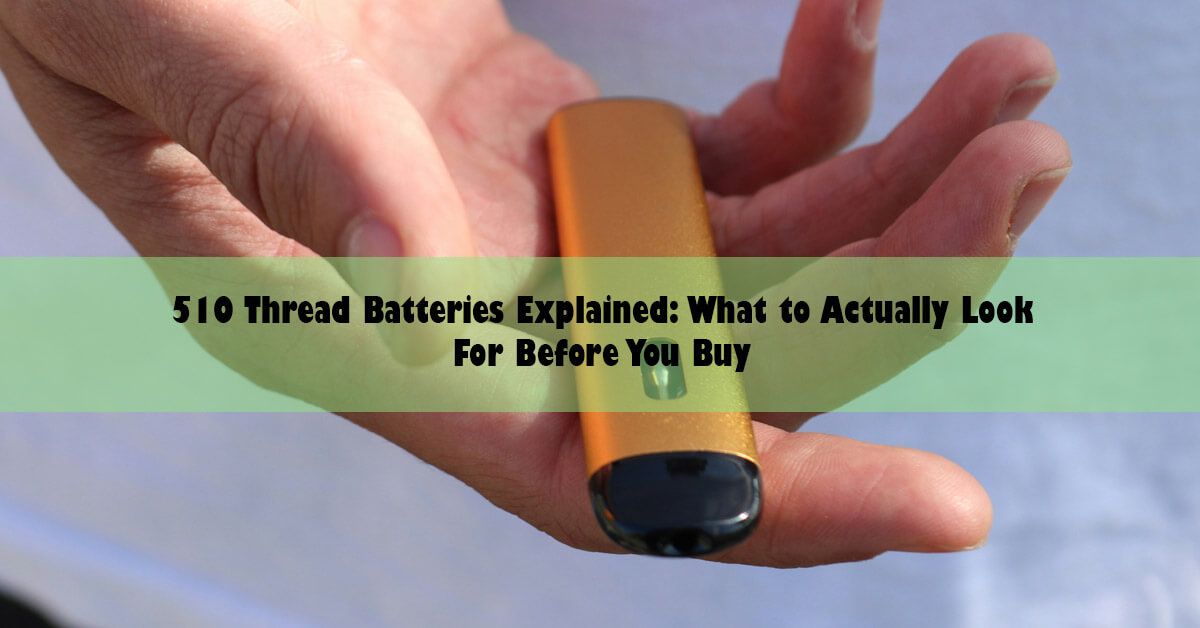
Standing at a dispensary counter staring at a wall of batteries is a strange kind of overwhelming. They mostly look the same, the price range is wide, and the person behind the counter has thirty seconds to explain the difference before the next customer needs helping. Most people end up buying whatever is cheapest or whatever the budtender happens to be holding.
That is a shame, because the battery matters more than the cartridge in most day-to-day setups. A cartridge is a cartridge. A battery determines how consistent your draw feels, how long a charge actually lasts, and whether you are still using the same device in six months or replacing it every few weeks.
Thread Compatibility Is the First Filter, Not the Last
"510 thread" refers to a screw-thread standard, the same way a light bulb has a standard fitting. Almost every cartridge sold in a licensed dispensary is built to this spec, which is exactly why it has become the default rather than a niche format. Confirming 510 compatibility before buying a device is not optional, it is the baseline. Skip it and a battery that looked fine in the display case simply will not thread onto the cartridge in the bag.
Beyond the thread itself, look at what the battery actually controls. A fixed-voltage battery is simple and hard to get wrong, good for a first device. A variable-voltage battery lets you match output to the cartridge, useful once a preference for a stronger or gentler draw develops, but it adds a setting to think about that a beginner may not want.
Battery Life Is a Real Cost, Not a Minor Detail
A cheap disposable battery inside a rechargeable-looking shell is still, functionally, a disposable. It will hold a charge for a few weeks of normal use and then degrade, at which point it gets replaced rather than repaired. James Smith, Head of Vaping Community at Discount Vape Pen, an online vaping store based in New Jersey that specialises in refillable 510-thread cartridge batteries, says this is the detail most first-time buyers overlook: "People compare the sticker price of two batteries and pick the cheaper one, without asking how many charge cycles it is actually rated for. A battery that costs a bit more but holds a real charge for a year outperforms three cheap ones bought back to back."
Capacity, measured in milliamp-hours (mAh), is the number worth checking before anything else on the spec sheet. A higher-capacity cell means fewer charges per week and a longer working life overall, which matters more the more often the device gets used.
What Actually Changed the Market
The wider shift away from single-use hardware has not been just a personal preference story. Several US states have introduced restrictions on flavoured disposable products in recent years, and public health bodies including the FDA and CDC have flagged the difficulty of tracking and regulating the flood of unmarked disposable devices entering the market compared with standardised, rechargeable hardware from established manufacturers. A rechargeable 510 battery, bought once and used with swappable cartridges, sidesteps most of that uncertainty simply by being a known, traceable device rather than a single-use import.
The Short Version
Confirm 510 thread compatibility first. Decide whether fixed or variable voltage suits how you actually use it. Check the mAh rating rather than the price tag alone. And treat a battery that is going to see daily use as worth spending slightly more on, the same way anyone would with a phone or a torch they rely on every day.
A Few Habits That Extend Any Battery's Life
None of this requires much effort once the right device is in hand. Avoid letting a battery sit fully drained for long stretches between charges, since deep discharges are one of the fastest ways to shorten a lithium cell's working life. Store it somewhere that is not sitting in direct summer heat, whether that is a car dashboard or a windowsill, since heat degrades battery chemistry faster than regular use does. And wipe the connection point clean occasionally. A dirty 510 connector is one of the most common reasons a perfectly good battery starts producing an inconsistent draw that gets blamed on the cartridge instead.
None of this is complicated, but it is the difference between a battery that quietly does its job for a year and one that turns into a recurring monthly purchase. The upfront research takes ten minutes. The payoff is not having to think about it again until it is genuinely time to replace the device.
Sources: US Food and Drug Administration guidance on vaping product standards; Centers for Disease Control and Prevention reporting on unregulated disposable vape products; state-level disposable vape flavour restriction tracking, Public Health Law Center.