
What a 9g cart actually delivers, and what to watch for before buying one
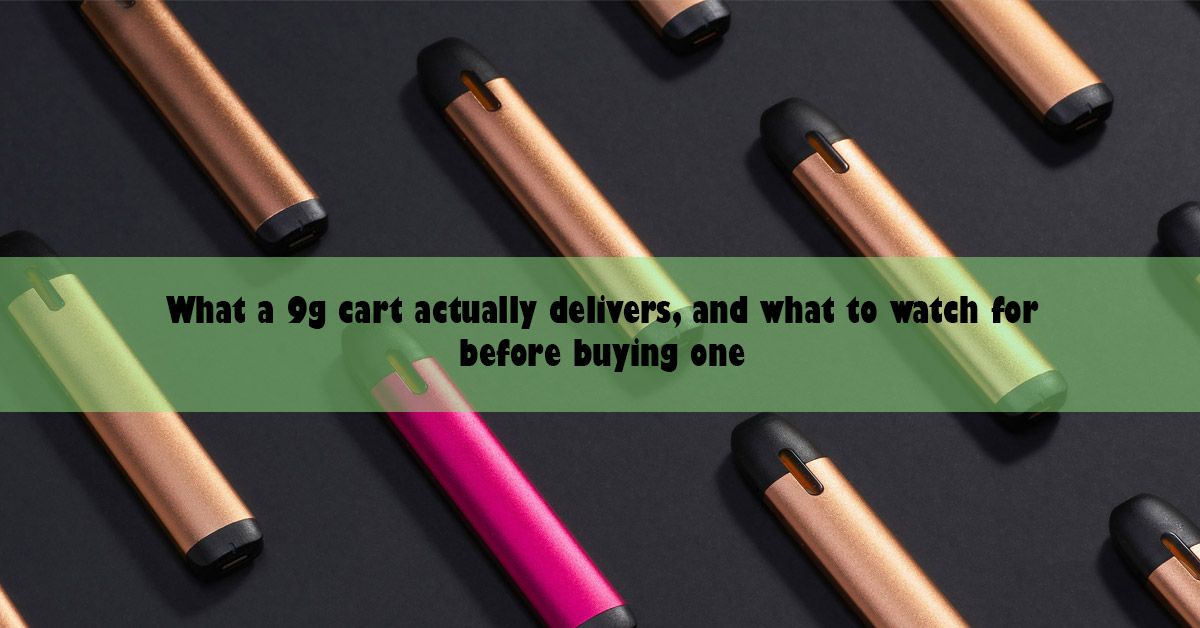
Nine grams of vape oil is a lot. That's the whole pitch of the 9g cart, which has quietly become one of the more interesting formats in the hemp-derived vape category. It sits between the throwaway 1-gram pen and the refillable hardware that asks more commitment than most casual users want to give. A 9 gram disposable cart promises weeks of use without swapping coils, hunting down adapters, or dealing with replacement pods. Whether it delivers on that promise depends on a handful of factors that get glossed over in most product listings.
What "9g" really means on the label
Nine grams refers to the oil capacity inside the device. A standard 510-thread cartridge holds either 0.5g or 1g. A typical disposable vape pen runs 1g to 3g. Stepping up to nine grams puts the device closer to a small bar of soap in size, with a larger battery to match.
Do the math. A moderate user pulling 3mg to 5mg of cannabinoid per draw, taking maybe 10 to 15 draws a day, will burn through a 1g pen in roughly two to three weeks. A 9g cart, used the same way, can run two months or longer. That changes the value calculation, even when the sticker price looks steep at first glance.
What nine grams does not tell a buyer is potency. A 9g device loaded with a blend that is 60% active cannabinoid contains more total THC than one loaded at 40%, regardless of the gram count. Reading the certificate of analysis still matters.
Why the format took off in the hemp market
The rise of larger-format disposables tracks the rise of hemp-derived cannabinoid products generally. After the 2018 Farm Bill carved out a legal lane for hemp containing less than 0.3% delta-9 THC by dry weight, manufacturers started building products around that allowance. Delta-8, delta-10, HHC, THCP, and hemp-derived delta-9 itself all moved into vape hardware.
Hemp cannabinoid blends often run at lower per-puff potency than state-legal cannabis market carts, especially for the milder analogs. A user who needs more volume to reach a comparable experience burns through a 1g cart fast. Loading more oil into a single device offset that, and the disposable form factor sidestepped the refill mess that came with bigger reservoirs.
Brands like TRĒ House, Litty, and Torch leaned into the format, and the 9g and similar high-capacity disposables became a fixture in the canna delta 9 product category, alongside edibles and tinctures.
The hardware question nobody asks
A 9g cart is only as good as the coil and battery driving it. Nine grams of oil flowing through a single coil over weeks of use is a lot to ask of a wick. Cheap coils burn out and scorch the oil, producing the harsh metallic taste that signals a device is done well before the tank is empty. That leaves the customer holding a half-full device that has become unpleasant to use, which is the worst possible outcome for something marketed on longevity.
Better manufacturers address this with ceramic coils rated for higher-volume use, mesh designs, or in some cases dual-coil setups inside a single disposable. Adjustable airflow helps too, since it lets the user dial back draw resistance as the oil thins or thickens with temperature.
Then there's the battery. A 9g cart needs one that delivers consistent voltage across hundreds of draws and recharges cleanly dozens of times. USB-C charging is now standard on most reputable devices. Anything still shipping with micro-USB in 2024 or later is a tell that the manufacturer cut corners somewhere a buyer can't see.
Where to buy delta 9 vapes without getting burned
Where someone buys a delta 9 product, especially in this larger format, often decides whether they get a good experience or something gray-market and disappointing. Gas station displays and mall kiosks are stocked with whatever distributor showed up that month, and the quality varies wildly. Online retailers that specialize in hemp-derived products tend to carry vetted brands and post lab results for each batch.
A reasonable shortlist of checks: the retailer publishes COAs from a third-party lab, the brand name is one with a real footprint (not a label nobody can find a second listing for), and the product page specifies the cannabinoid breakdown rather than just saying "delta 9 blend." Shops like Smokea Delta-9 tend to organize their listings by cannabinoid and format, which makes comparing a 9g disposable against a 3g pen or a refillable cartridge straightforward.
Return policies matter more with high-capacity devices. A defective 1g pen is a minor annoyance; a defective 9g cart is real money gone.
Strain blends, terpenes, and the experience
Most 9g carts on the market are not single-cannabinoid devices. They blend hemp-derived delta-9 with delta-8, THCP, HHC, or live resin terpenes to create a profile the brand markets under a strain name. Blue Dream, Gelato, Northern Lights, the usual roster.
Those strain names are marketing more than botany when applied to a hemp distillate vape. The terpene profile may genuinely echo the cannabis strain it borrows the name from, but the underlying cannabinoid mix is whatever the brand formulated. A "Blue Dream" 9g cart from one brand can feel substantially different from a "Blue Dream" from another, and there's no industry standard that says otherwise.
The addition of minor cannabinoids like THCP, which is significantly more potent per milligram than delta-9, is where experience differences really show up. A blend with even a small THCP percentage hits noticeably harder than a straight delta-9 device, which is worth knowing before taking the same size draw as on a regular pen.
Live resin and live rosin variants, where actual cannabis-derived terpenes are added back into the oil, generally taste better than devices using botanical terpenes. They also cost more.
Storage, charging, and getting the full nine grams out of the device
A 9g cart used over two months sits in pockets, bags, hot cars, and cold nightstands. Oil thickens in cold and thins in heat. Both affect draw quality and coil longevity.
Keeping the device upright when not in use helps prevent the mouthpiece from gunking up. Storing it away from direct sunlight protects the cannabinoids from degrading, which is a slow but real process. Hemp-derived delta-9 in particular oxidizes over time and can convert to CBN, which is a different experience entirely, sedating rather than euphoric.
Charging habits matter for the battery. Topping off frequently is better than running it dead. Most 9g devices have a small LED that indicates charge state, and a few have actual percentage displays now. Leaving the device on the charger overnight, repeatedly, will shorten the battery's usable life before the oil runs out.
Getting the last gram or so out of any large disposable is the hardest part. A pre-warm function, if the device has one, helps the residual oil flow to the wick. A few seconds of gentle warmth from a hand, not a flame, can do the same thing.
Worth it or not
A 9g cart makes sense for a daily user who has already settled on a brand and blend they like. The per-gram cost typically beats smaller formats and the convenience is real.
For a new user, or someone still sampling different cannabinoid profiles, the format is overkill. Buying nine grams of a blend that turns out to be wrong is a worse outcome than buying one gram of the same blend and moving on.
That's the trade. Pay attention to what's inside the device, not just how much of it there is.